Les heures sombres
light and shadow

Col. Barnaby Quince (Rtd)
Blue Badge Guide and hoplophile
Barnaby is a Blue Badge tourist guide with a passion for the darker chapters of Wigan history, with a particular enthusiasm for armed conflict, public punishment and infectious diseases.His interests range from the craftsmanship of antique weaponry to the practical administration of workhouses and the finer details of historical violence. He maintains that history is best appreciated without sentimentality and that the most unfortunate events are frequently the most instructive.
The views and opinions expressed by Colonel Barnaby Quince are his own and do not necessarily reflect the views, opinions or position of Costa del Wigan. Costa del Wigan accepts no responsibility for statements made by individual contributors.
An Officer and a Gentleman’s Guide to a Darker Wigan
Here, I present my six favourite things about Wigan, drawing upon the town's rich heritage of conflict, hardship, tragedy and human endeavour.My selections reflect an appreciation of those events and circumstances that others might conveniently prefer to forget.I hope that visitors to Costa del Wigan will join me on one of my informative guided tours and I also do children's parties and bar mitzvahs.
Mab's Cross
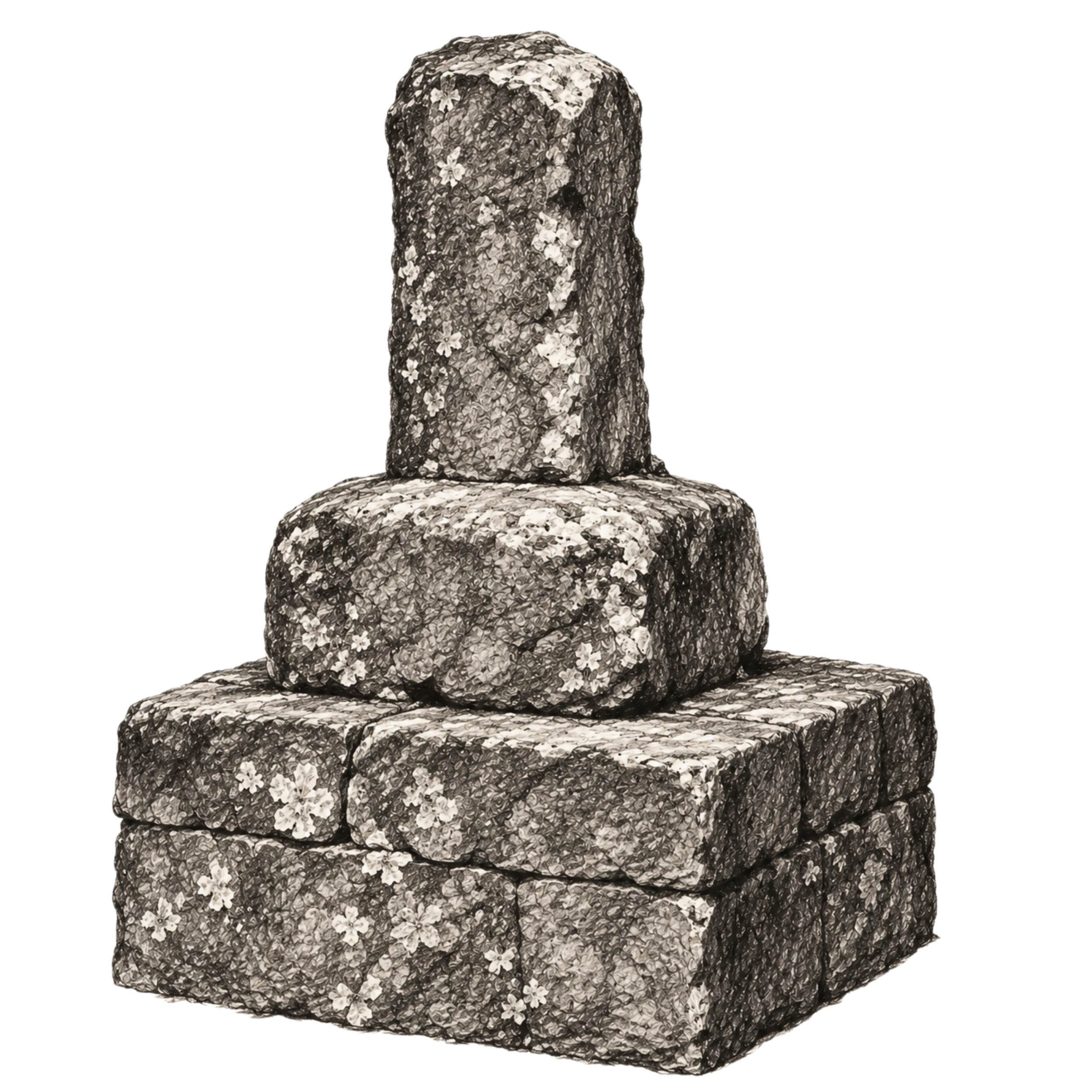
An admirable lesson in obedienceStanding on Standishgate, Mab's Cross is a medieval monument associated with Lady Mabel Bradshaigh of Haigh Hall.According to legend, believing her husband dead, Lady Mabel took another lover.When Sir William returned, the resulting unpleasantness ended in bloodshed, and Lady Mabel was required to walk barefoot from Haigh Hall to the cross as penance.The historical accuracy of this account is disputed, although I find its underlying principles entirely satisfactory.Expectations were clearly established, misconduct carried consequences and the authorities were not burdened by endless appeals.The weathered stonework possesses a dignity sadly absent from modern public sculpture. Its simplicity is magnificent. I particularly admire its refusal to accommodate the tastes or comfort of the general public.I recommend a respectful inspection, preferably in silence. Those unable to conduct themselves appropriately should perhaps consider remaining at home.
Trencherfield Mill Steam Engine

The magnificent virtue of absolute obedienceHoused within Trencherfield Mill at Wigan Pier is one of the finest surviving examples of British industrial engineering.Built in 1907, this magnificent steam engine powered the mill's cotton-spinning machinery. Its enormous flywheel, intricate mechanisms and extraordinary precision represent an age when Britain understood the importance of making things properly.I have always admired the industrial revolution, particularly its capacity to extract remarkable quantities of labour from comparatively modest individuals. The cotton mills of Lancashire provided employment for thousands, including women and children, whose contribution to Britain's prosperity is frequently overlooked.Working conditions were undoubtedly demanding. Long hours, deafening machinery, airborne cotton dust and the ever-present possibility of serious injury were accepted features of industrial life. Such circumstances produced a resilience that is regrettably difficult to cultivate today.The engine itself is a thing of extraordinary beauty. Its immense power, relentless motion and complete indifference to anything unfortunate enough to obstruct its operation command my deepest respect.I have always been particularly interested in industrial accidents. The combination of enormous mechanical forces and the occasional lapse in human concentration can produce consequences of remarkable ingenuity. For those interested, I maintain a small collection of contemporary accounts, several of which include illustrations.
The Black Death 1349
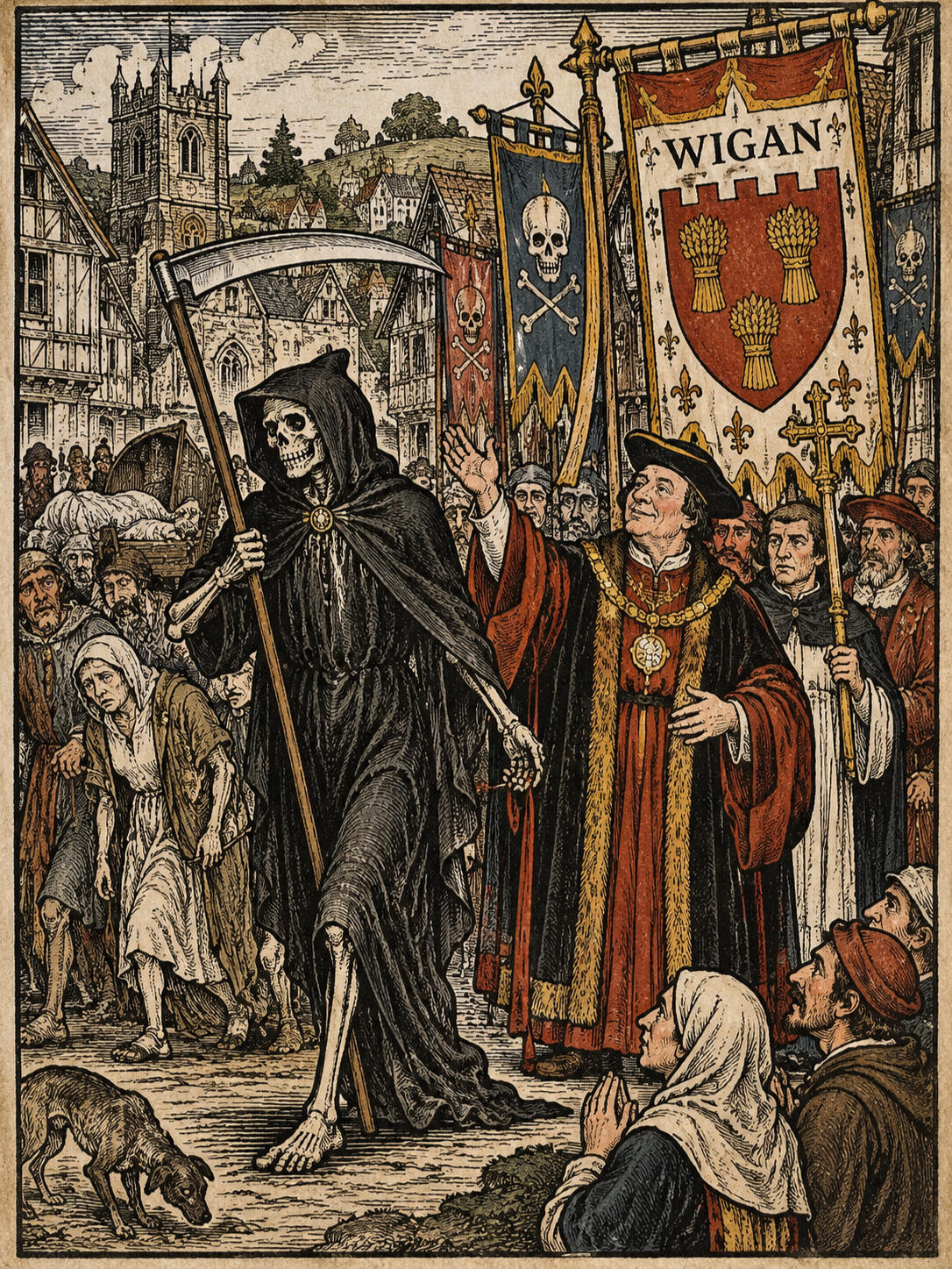
Ring a Ring o' RosesThe Black Death reached Wigan in the summer of 1349, ensuring that our town played its part in one of the greatest catastrophes in European history.Much has been written about the devastation of London, Paris and Florence, but comparatively little attention has been paid to Wigan's contribution.This is a familiar injustice. Once again, the achievements of a proud Northern community have been overshadowed by those of larger and more fashionable places.The disease was spectacularly unpleasant. High fever, agonising swellings, vomiting and, in many cases, death within days.Although precise local mortality figures have not survived, there is every reason to believe that Wigan's inhabitants suffered with the same determination as their continental counterparts (but much less gesticulation I'd wager).Conditions were extremely conducive to an epidemic. Medieval sanitation was rudimentary, waste disposal lacked organisation and the population had little understanding of how infection spread.One imagines the deserted streets, the tolling of church bells, the hurried burials and the growing uncertainty as to who might survive the week. It must have been an extraordinary time to be alive, however briefly.
The Old Courts
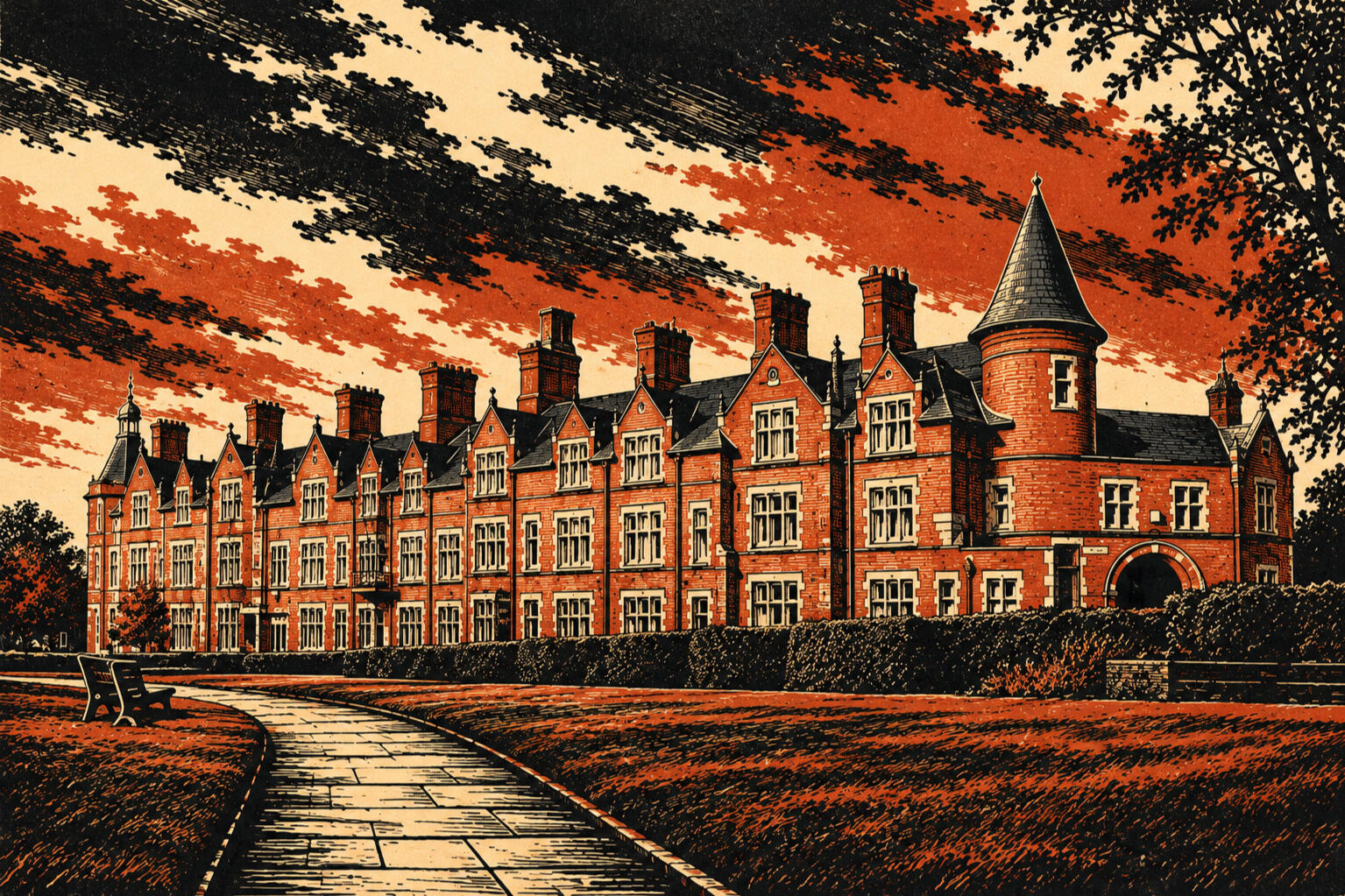
Justice was once a spectator sportBuilt in 1887, Wigan's Old Courts on Crawford Street once accommodated the magistrates' court and police station. It is a handsome building from an age when justice was taken seriously and those appearing before it were seldom looking forward to the experience.I have always been fascinated by the history of criminal punishment. Public hangings, in particular, combined several admirable features: a large audience, a memorable occasion and very little prospect of reoffending.The British were once exceptionally accomplished in this field. Gallows were erected, crowds assembled and refreshments sold. Entire families attended. It is difficult to imagine a more effective way of bringing a community together, before the arrival of Ant &n Dec.Birching was another interesting tradition. A relatively inexpensive punishment requiring little equipment, modest accommodation and a certain degree of stamina from the person administering it. I have several examples in my private collection, together with a particularly fine cat-o'-nine-tails.The Old Courts also reminds us of the importance of incarceration. The prospect of being locked in a small room, uncertain of one's immediate future, can have a profound effect upon a person's outlook. I have occasionally found it useful in resolving domestic disagreements.Today, the building is a thriving centre for arts and entertainment. Where once the accused awaited judgement, audiences now gather for music, theatre and comedy. It is pleasing to see the premises continue to attract people who may subsequently regret their decisions.During my guided tours, I encourage visitors to reflect upon the considerable progress made in criminal justice. We have abolished public executions, abandoned corporal punishment and introduced a range of measures designed to make imprisonment considerably less disagreeable.I am not entirely convinced that every change has been an improvement.Nevertheless, the Old Courts remains one of my favourite buildings in Wigan. I particularly enjoy standing outside and imagining the sound of a sentence being pronounced, followed by that wonderful moment of silence before its full implications become apparent.
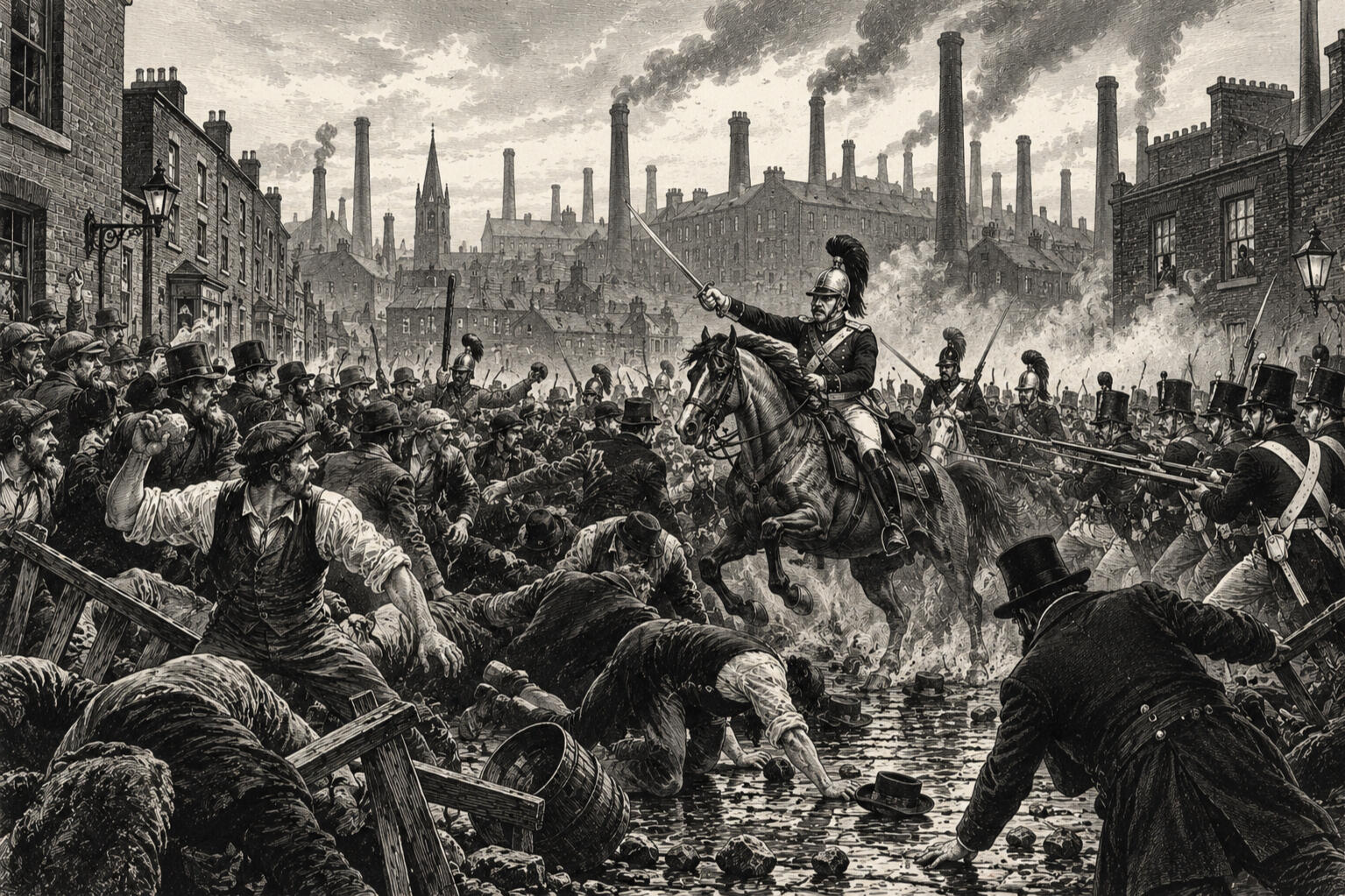
The Wigan Riots, 1853
The importance of preparednessNovember 1853 was a particularly eventful month in Wigan. Industrial unrest, disputes over wages and growing hostility between workers and employers brought the town to a state of considerable disorder.The disturbances arose against a background of bitter industrial relations. Working men, dissatisfied with their pay and conditions, took to the streets in numbers sufficient to alarm the authorities. What began as an industrial dispute developed into a confrontation that required the intervention of the military.Few provincial towns can boast of having created circumstances serious enough to warrant the deployment of soldiers against their own inhabitants. It suggests a certain determination on both sides, although naturally my sympathies lie with those possessing the superior equipment.The arrival of armed troops must have been a magnificent spectacle. The uniforms, the discipline, the horses and the reassuring presence of military weapons would have transformed an otherwise disagreeable labour dispute into something approaching a proper campaign.I have studied accounts of nineteenth-century civil disturbances with particular attention to the weapons employed. A cavalry sabre is an exceptionally elegant instrument, although its effectiveness depends considerably upon the enthusiasm and training of the gentleman wielding it.One should not overlook the workers themselves. Many were enduring considerable hardship, and their willingness to confront armed authority demonstrated undeniable courage. Courage, however, is not a substitute for adequate preparation. I have frequently made this point during my children's historical workshops.What interests me most about the Wigan disturbances is the speed with which ordinary civic life could give way to military operations. A familiar street becomes a potential battlefield. Neighbours become adversaries. A disagreement over wages suddenly presents opportunities for mounted manoeuvres.It is precisely this unpredictability that makes local history so rewarding.Modern visitors may find the deployment of soldiers against industrial workers troubling. I prefer to consider the organisational challenges involved, particularly the difficulty of manoeuvring cavalry through crowded streets.
Kitty Beawt Yed
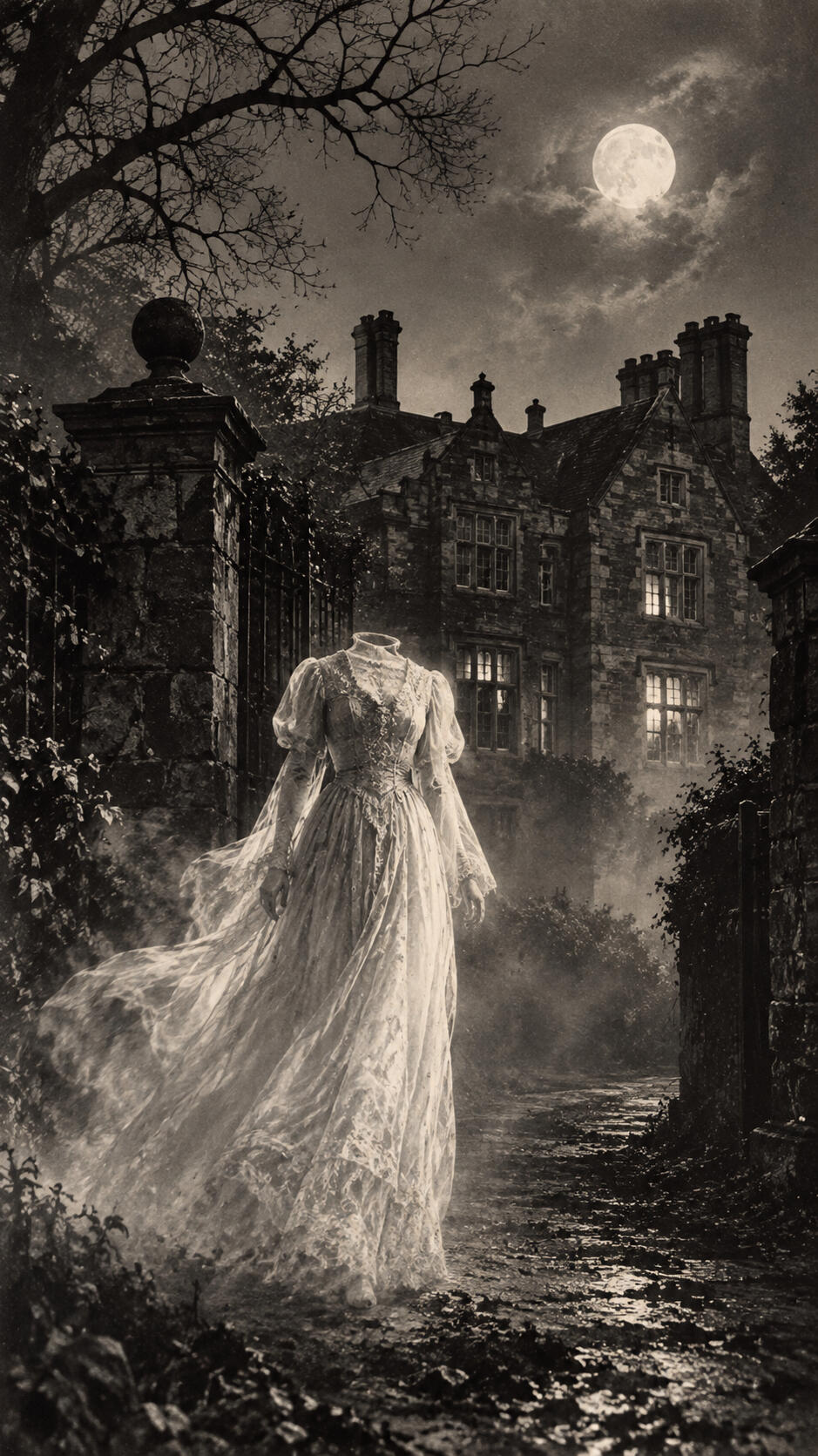
A most unfortunate domestic arrangementOf all Wigan's supernatural inhabitants, I have always felt a particular affection for Kitty Beawt Yed, the headless ghost associated with Ince Hall.The story concerns a young woman, a disputed inheritance and a thoroughly dishonest lawyer. According to local legend, Kitty was murdered to prevent her from claiming what was rightfully hers. Her remains were concealed, although her skull was subsequently discovered in the grounds.It is an excellent story, combining property, deception, murder and the inconvenience of a woman refusing to disappear quietly. Kitty's ghost is said to have wandered the neighbourhood without her head, occasionally making her presence known to those who had reason to fear her.The lawyer, meanwhile, apparently found himself troubled by the consequences of his actions. I have some sympathy for his predicament. Whatever one's views on his methods, it must be irritating to discover that an arrangement intended to settle a difficult matter permanently has merely introduced a supernatural complication.I have encountered several determined women during my lifetime, although none, to my knowledge, has returned from the grave.Visitors sometimes ask whether I believe in ghosts. I see no particular reason why the dead should be any more inclined to respect one's privacy than the living.Should Kitty ever appear during one of my guided tours, I would be delighted to meet her. I have several questions concerning the practical difficulties of disposing of human remains, and she may be uniquely qualified to answer them.